
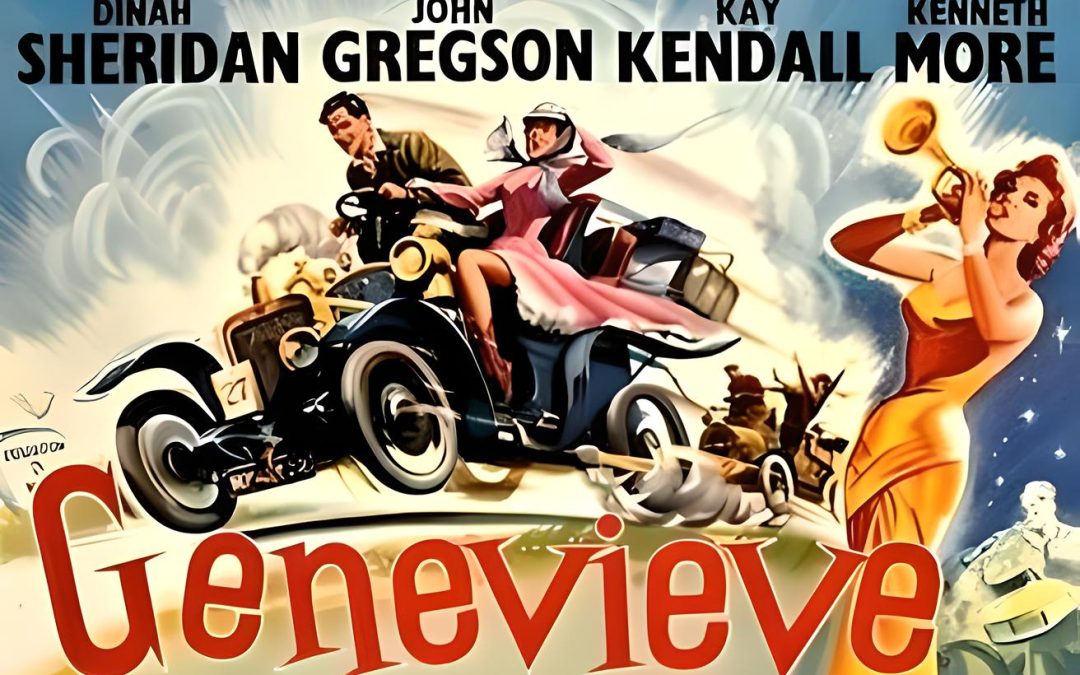
Genevieve poster. Kenneth More’s Spyker was the cad’s car up against Gregson‘s homely Genevieve in the 1953 classic.
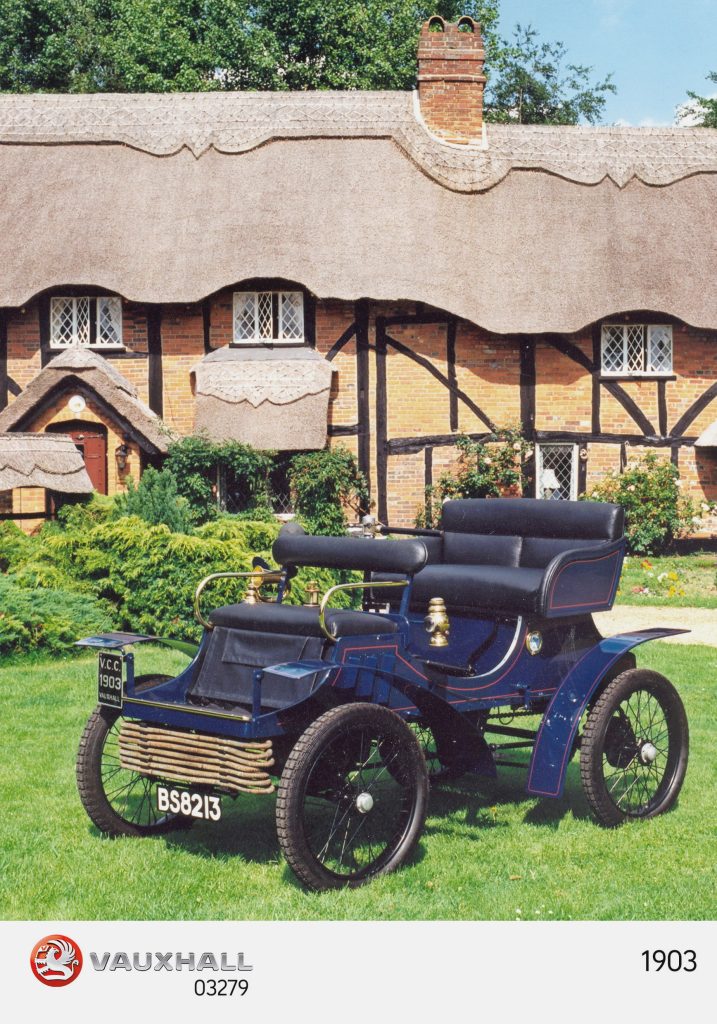
Vauxhall 5HP celebrated its centenary year.
There has never been such a time for costly cars. Not just moderately costly like MG Rover XPower SV coupe at this year’s Motor Show at between £65,000 and £85,000 but really costly. Cars like the £100,000 Bentley or £158,000 Aston Martin. Or the black Enzo Ferrari for £450,000. Even the humble Spyker is between £144,000 and £210,000 before VAT.
Spyker? Unless your Mastermind specialist subject is obscure Dutch cars built between 1898 and 1925, you may not have heard of it. A Spyker was the cad’s car Kenneth More drove in Genevieve, the 1950s film comedy of the London to Brighton veteran car run. Jacobus and Hendrik-Jan Spijker were resurrected for a Le Mans and Sebring racer this year and made into a road-legal coupe. Still more of a racing car than a road car, it comes in various guises as a Porsche lookalike with huge reserves of power.
It is anybody’s guess who will buy them – cash-rich drug barons or wealthy footballers perhaps; the manufacturers are full of confidence. Noble, which makes four up-market sports cars a week has its hundredth on its stand at Birmingham NEC. It says it sells them to IT millionaires or enthusiasts who don’t want, or already have yachts, second homes, or small aircraft. More car makers than ever are clamouring to get into such niche markets with big mark-ups, raising their game clear of the volume market where competition is still cut-throat, capacity under-used and discounts rife.
Even Porsche is getting into new markets with its off-road Cayenne. It has built a factory in Leipzig to make it, and when it comes on stream next year it will be either an entry-level £60,000 with a top speed of 150mph, or a twin-turbo capable of 165mph and £185,000. It is of mind-scrambling complexity, shared in many respects except for some refined electro-hydraulics with VW Touareg. Nothing wrong with that. Jaguars of the 1930s shared their underpinnings with a much humbler Standard 14. The difference then was that nobody seemed to know. Or care.
Kevin Wale the new managing director of Vauxhall, promised that following its centenary year it too was going to get back to radical products. He told a press conference that building on the success of the VX220 Vauxhall would return to the performance field with cars that would put the excitement back into motoring. This was code for an assault on the high-profit area not dependent on volume production to make money. Fast cars cost little more to make than slow cars, but they are less price sensitive.
Their development is being encouraged by the flourishing hobby of track days. Here groups of enthusiasts’ club together to hire a racing circuit, not to race on, but just to drive at speeds illegal on public roads. The traffic is fast and with luck all going in the same direction. There is not much point in having a 150mph car unless you can use it to hone your skill on the track, so track days provide a rationale for spending big money on a fast car.
MG is a case in point. MG Rover is falling behind in the volume market. It will never compete with Ford and Vauxhall, or Japanese and Far East manufacturers. It may even create useful partnerships although one mooted with China Brilliance is under a cloud until the probity of its CEO, Mr Yang, is cleared up. It could cooperate with Tata in 1ndia or even acquire the old Daewoo, formerly FSO factory in Poland that nobody seems to want. The MG XPower SV with extravagant styling and enormous strength is another means of making useful profit from a niche product. Even the entry-level car has 325bhp, the top model 965bhp with the factory-approved nitrous oxide injection kit. It might be more convincing however had it completely dispensed with its old Ford Mustang antecedents.
The MG’s engine is a 5.0 litre Ford V8, a recipe repeated on the Invicta, like the Spyker a reviva1 of an old and deeply respected name. lnvictas of the 1920s and 1930 tended to be large-engined rather lazy cars with plenty of low-speed pulling power, dignified appearance, and high quality. They were also expensive and following the 1930s slump sales fell away. The founder Noel Macklin, father of 1950s racing driver Lance Macklin, tried to make smaller Invictas but they were not a success.
Invicta follows a successful pattern of 1930s cars, big, powerful, of striking appearance and high quality. It claims it only needs to make 15 of the carbon-fibre bodies a year to break even. At just under £70,000 each it might just manage; there must be 15 footballers or IT millionaires who do not want Ferraris or Mercedes-Benzes, or Porsches.
Published September 2002